


Osteosarcomas
Compliance rules
1Summary
Osteosarcoma is the most common malignant bone tumor and is characterized by early micrometastasis. The introduction of systemic chemotherapy in addition to tumor resection has significantly improved the prognosis for patients [1, 2]. Multimodal therapy involving neoadjuvant chemotherapy followed by wide tumor resection and adjuvant chemotherapy is now considered the standard of care. This approach can achieve 5-year survival rates of 70% [3]. Any primary metastases must be surgically removed if the goal of treatment is curative. High-dose radiation therapy is indicated only in cases of incomplete tumor resection. In the event of local or systemic relapse, complete resection is of the utmost importance. Second-line chemotherapy for patients in second surgical remission is frequently performed but is not supported by prospective studies.
2Basics
2.1Definition and Basic Information
Osteosarcoma is a malignant mesenchymal tumor characterized by the formation of immature bone substance (osteoid). Hematogenous metastasis must be assumed even at the time of initial diagnosis. Predilection sites are the metaphyses of the long bones (especially the knee region with the distal femur and proximal tibia, but also the proximal humerus); involvement of the spine and pelvic skeleton is less common. Most patients present with a solitary tumor lesion [4, 6].
2.2Epidemiology
Osteosarcoma is rare, with an annual incidence of approximately 0.2–0.3 per 100,000 people (crude incidence rate). In Germany, an average of 180 cases per year were recorded in the state cancer registries and the German Childhood Cancer Registry between 2019 and 2023; in Austria, 23 cases; and in Switzerland, 20–30 cases. Children and adolescents account for about one-third of cases; in this group, osteosarcoma is the most common malignant bone tumor, closely followed by Ewing sarcoma. Overall, about one-quarter of bone malignancies are osteosarcomas.
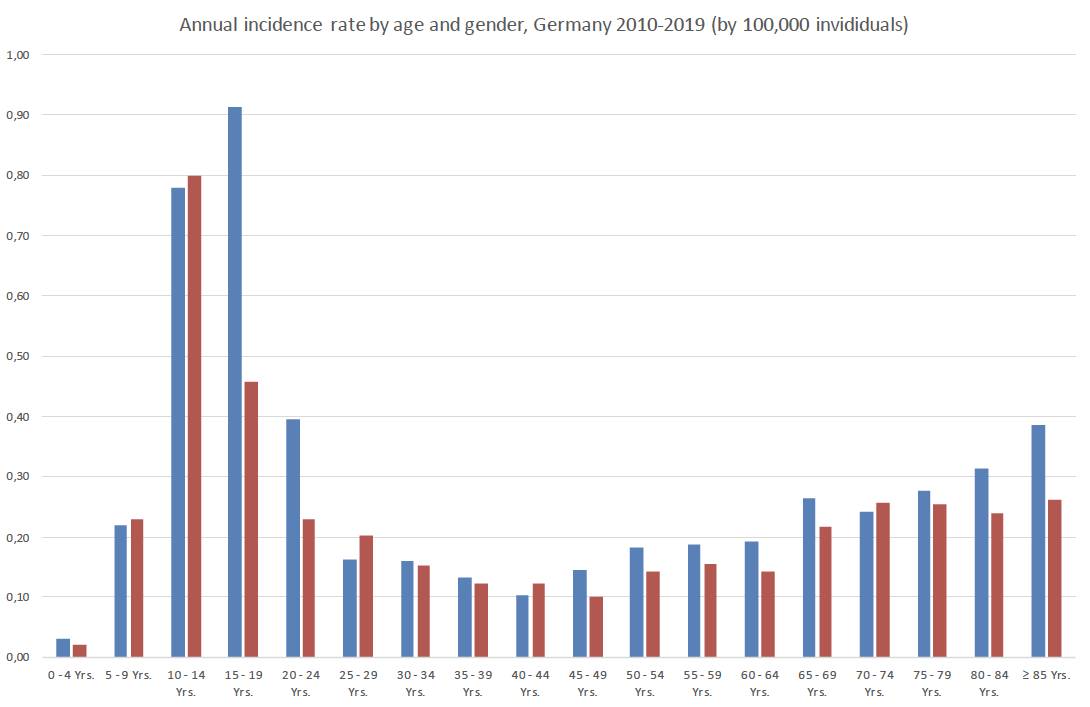
Among new cases, there is a clear peak in incidence in the second decade of life; beyond the age of 70, the incidence rises slightly again. The overall slightly higher incidence among males (at a ratio of 1.2:1) is primarily due to the significantly higher rates of the disease among those aged 15 to 24 (Figure 1). The median age at diagnosis is therefore 31 years for men, slightly lower than for women (34 years).
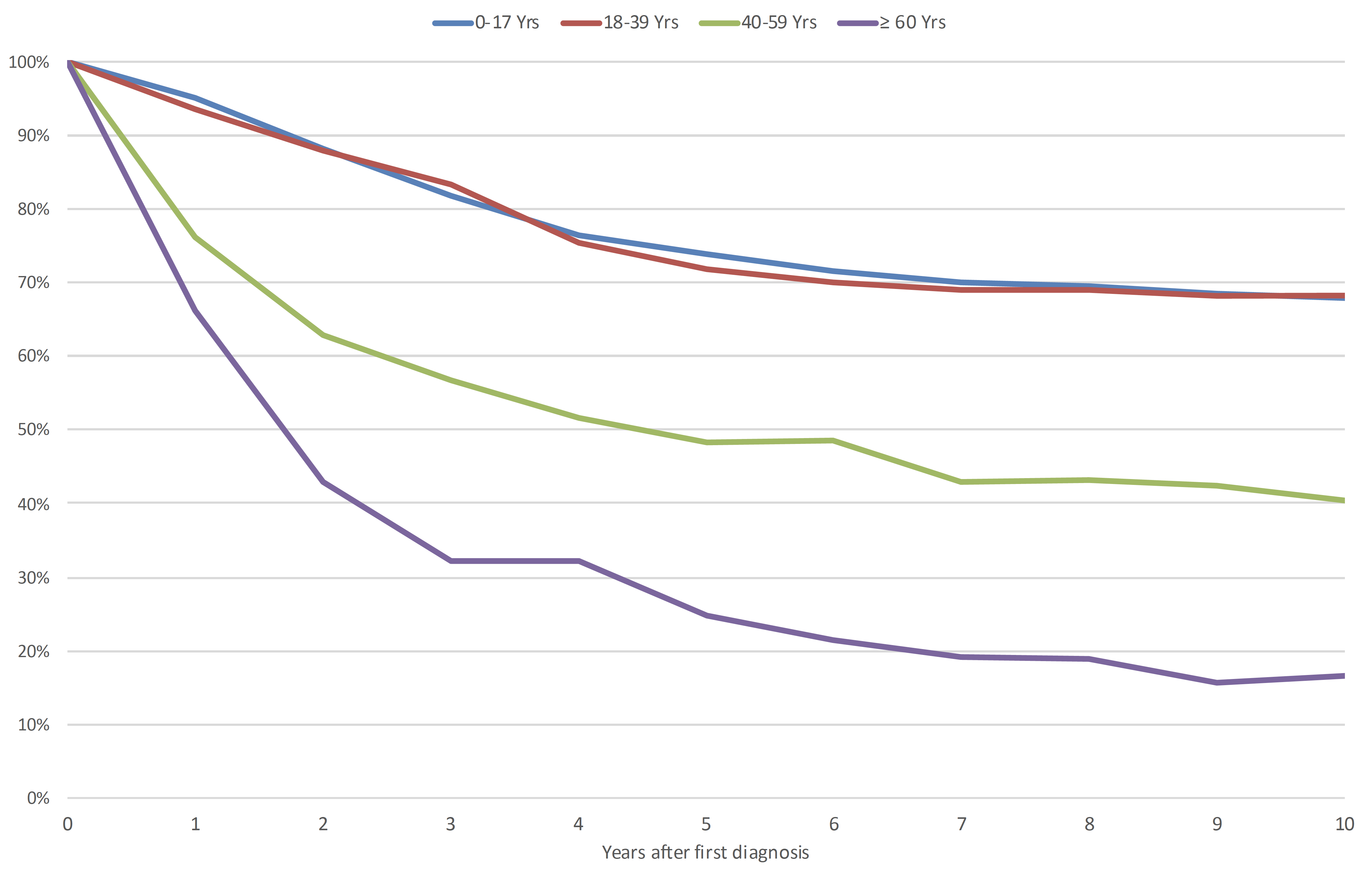
About half of the cases involve the long bones of the lower extremities, although this proportion exceeds 75% in children and adolescents and declines significantly with age. The relative 10-year survival rates exceed 70% for both children and adolescents as well as young adults (up to age 39) and decline significantly in middle and older adulthood (Figure 2).
2.3Pathogenesis
Osteosarcoma is a typically highly aggressive bone-specific sarcoma that originates from pluripotent mesenchymal progenitor cells. Conventional osteosarcomas are mostly characterized by high genomic instability with a complex karyotype and numerous numerical and structural aberrations [8]. Alterations in TP53, RB1, NF2, PTEN, and ATRX are among the most common recurrent alterations, but they are not specific. Approximately 80% of osteosarcomas also exhibit alterations that are found in cancers with defects in the homologous recombination repair system [9].
2.4Risk Factors
Several risk factors for the development of osteosarcoma are known:
Radiation therapy (typical time interval 12–16 years)
Chemotherapy (especially alkylating agents)
Paget's disease (in patients over 40 years of age)
Genetic predisposition syndrome (e.g., TP53 mutation in Li-Fraumeni syndrome, RB1 mutation in retinoblastoma, alterations in various RECQ helicases in Bloom syndrome, Werner syndrome, Rothmund-Thomson syndrome).
For patients with osteosarcoma, genetic counseling and TP53 germline testing should be performed before initiating potentially genotoxic therapies. If a TP53 germline variant is confirmed, radiation therapy should be avoided whenever possible or used only after an interdisciplinary risk-benefit assessment (increased risk of radiation-induced secondary malignancies) [69].
3Prevention and Early Detection
There is no evidence for effective measures for prevention and early detection in the general population. Exceptions are individuals with a known hereditary predisposition.
4Clinical characteristics
The leading symptom is pain in the affected region that is often persistent for weeks, progressive, and unrelated to physical exertion. Additionally, swelling or functional impairment may occur. In approximately 10% of cases, a pathological fracture is already present at the time of diagnosis [10]. General symptoms such as fever, weight loss, or a deteriorated general condition usually do not occur. In cases of osteosarcoma in the jaw region, loosening of the teeth and swelling may be early symptoms. In approximately 10–20% of patients, macrometastases can already be detected on imaging at the time of initial diagnosis. The most common target organ is the lung, followed by the bones. In the remaining 80–90% of patients, micrometastasis must be assumed at the time of initial diagnosis. The detection of metastasis at initial diagnosis results in a poorer prognosis [11].
5Diagnosis
5.1Diagnostics
A thorough medical history and complete physical examination form the basis of rational diagnosis. The following diagnostic measures are recommended (see Tables 1, 2, and 3).
|
|
|
There are no specific laboratory parameters for osteosarcoma.
Instrumental functional diagnostics are used to assess the patient’s ability to undergo treatment prior to chemotherapy and to evaluate organ toxicity during chemotherapy. For patients who still require genetic counseling, fertility-preserving measures should be discussed and implemented at an early stage [72].
5.2Classification
5.2.1Histological subtypes
Histological classification is based on the current WHO classification for soft tissue and bone tumors (2020). Most osteosarcomas are high-grade tumors (G3); forms with intermediate (G2) or low malignancy (G1) also occur (see Table 4). The most common are high-grade conventional osteosarcomas (80–90%), which arise within the bone marrow cavity (intramedullary). Parosteal and periosteal osteosarcomas originate from the bone surface. Extraskeletal osteosarcomas are classified as soft tissue sarcomas according to the WHO classification. Multifocal osteosarcoma may rarely occur. In such cases, it can be difficult to distinguish whether the lesions represent multiple, synchronous, primary osteosarcoma foci or metastases. Secondary osteosarcomas occur, for example, in the context of Paget’s disease of bone or following radiation therapy and will be listed as a separate entity in the upcoming WHO classification.
5.2.2Staging
The classification of the extent of the primary tumor and metastasis is based on the TNM criteria of the American Joint Committee on Cancer (AJCC) (see Table 5).
6Therapy
6.1Treatment structure
The treatment plan for patients with osteosarcoma should be determined by an interdisciplinary tumor board at a center with experience in treating osteosarcoma patients. Since subclinical metastasis must be assumed even at the time of initial diagnosis in cases of localized high-grade osteosarcoma, neoadjuvant chemotherapy is typically administered, followed by resection and subsequent adjuvant chemotherapy. If the primary tumor has already been resected, the entire course of chemotherapy is administered as adjuvant therapy. The algorithm for first-line therapy is shown in Figure 3.
*also includes neoadjuvant therapy if primary surgery has been performed
6.1.1First-line therapy
6.1.1.1Low-grade osteosarcomas
For low-grade osteosarcomas (periosteal and low-grade central osteosarcoma), treatment is primarily surgical due to the low potential for metastasis. However, if a high-grade component (dedifferentiation) is detected, chemotherapy may be considered [12]. Smaller areas of dedifferentiation in low-grade central osteosarcoma do not yet constitute a clear indication for chemotherapy [13].
6.1.1.2Periostial osteosarcoma
6.1.1.3High-grade osteosarcoma
6.1.1.3.1Chemotherapy
The importance of chemotherapy for high-grade osteosarcomas starting at the time of the primary diagnosis is undisputed. Although no survival benefit has been formally demonstrated for the combination of neoadjuvant and adjuvant chemotherapy compared to adjuvant chemotherapy alone [16], neoadjuvant/adjuvant chemotherapy is preferred. The histopathological response to neoadjuvant chemotherapy is considered an important prognostic factor. It has been shown that the 5-year survival rates for patients with a good histopathological response (>90% necrosis rate) are significantly higher than for patients with a poorer response (50–90% or <50% necrosis rate) [6, 19, 21]. Retrospective case series also suggest that a good histological response is associated with an increased likelihood of limb-sparing resections as well as improved local tumor control [35, 57].
Doxorubicin, cisplatin, high-dose methotrexate (HD-MTX), and ifosfamide have demonstrated antitumor efficacy in osteosarcoma and are used as part of first-line therapy. Different chemotherapy regimens are recommended depending on the patient’s age. HD-MTX at a dose of 12 g/m²is used as standard only in younger patients (≤ 40 years) due to its higher toxicity and is replaced by ifosfamide in older patients. In cases of poor response to therapy, there is the option of supplementing HD-MTX with a slightly lower dose of 8 g/m² in older patients (see below). Retrospective data have shown that the time interval between tumor resection and the start of adjuvant chemotherapy influences the prognosis [22]. Adjuvant chemotherapy should therefore, if possible, be initiated within 21 days of resection. Patients in whom metastasis is already detected at initial diagnosis have a poorer prognosis than patients with locally confined disease. Lung metastases are associated with a more favorable prognosis compared to bone metastases. Nevertheless, even in these patients, long-term survival rates of 10–50% can be achieved through the use of multimodal therapy combining chemotherapy and resection (primary tumor and metastases) [23, 25]. Regarding the choice of chemotherapy, patients with primary metastasis are treated in the same manner as patients with localized osteosarcoma.
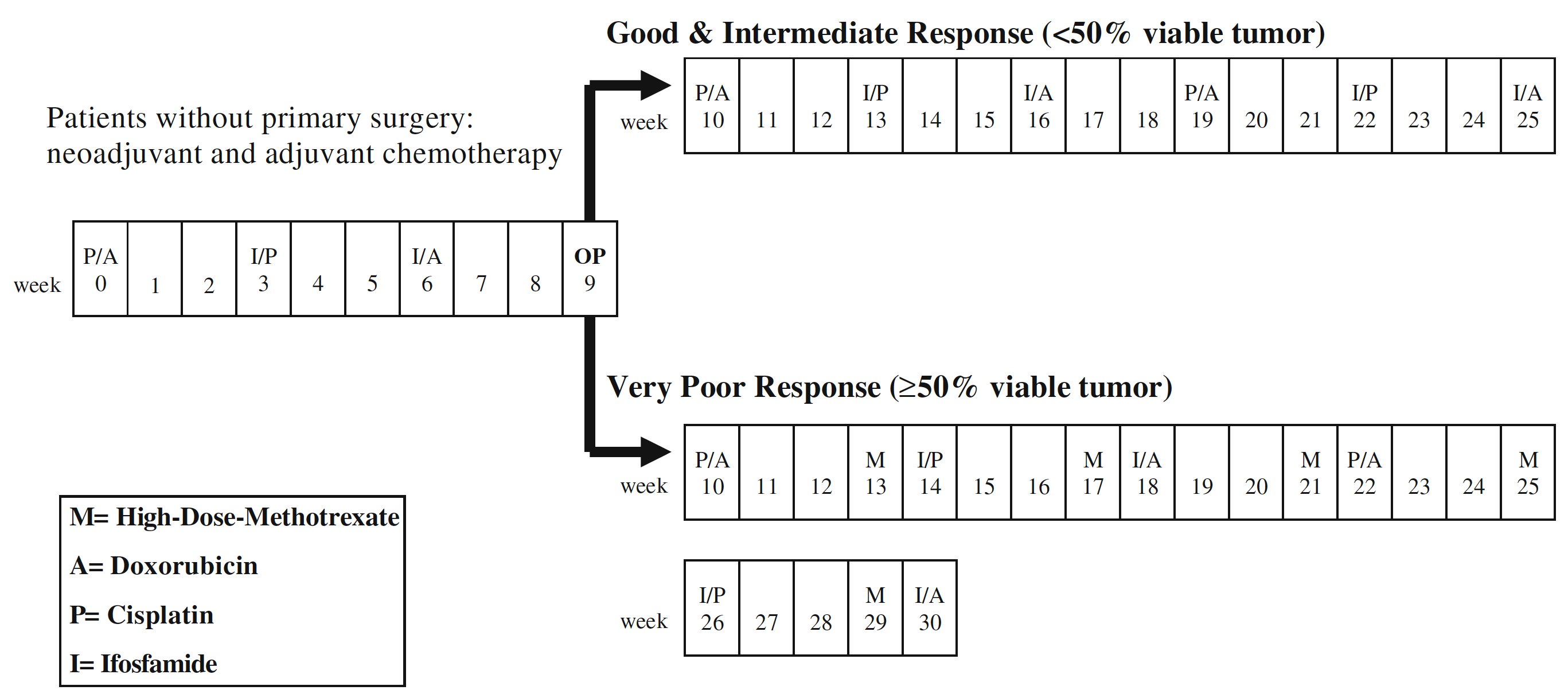
Treatment is administered in accordance with the standard arm of the EURAMOS-1 protocol using HD-MTX (12 g/m²), doxorubicin, and cisplatin (MAP chemotherapy; Figure 4). The first 2 cycles of MAP are administered neoadjuvantly. Postoperatively, 2 additional cycles of MAP are followed by 2 cycles of HD-MTX and doxorubicin (MA). Additions or intensification of chemotherapy based on histological response within the EURAMOS-1 study did not result in improved treatment outcomes but did contribute to increased toxicity [10, 26, 27].
In cases of contraindications to anthracyclines (e.g., pre-existing cardiac conditions, reaching the cumulative dose limit due to prior treatments), the French M-EI regimen (HD-MTX – etoposide/ifosfamide) offers an alternative [59, 70].
Based on the results of a randomized American study, which demonstrated a benefit for overall survival (OS) following the addition of the immunomodulator liposomal muramyl tripeptide phosphatidyl ethanolamine (L-MTP-PE) to postoperative chemotherapy, this was approved in combination with chemotherapy for the treatment of completely resected, localized osteosarcoma patients < 30 years in Europe (but not in the United States) [28]. However, according to various European and American osteosarcoma groups, these data are insufficient to recommend the routine use of this substance outside of controlled trials due to a complex study design [29].
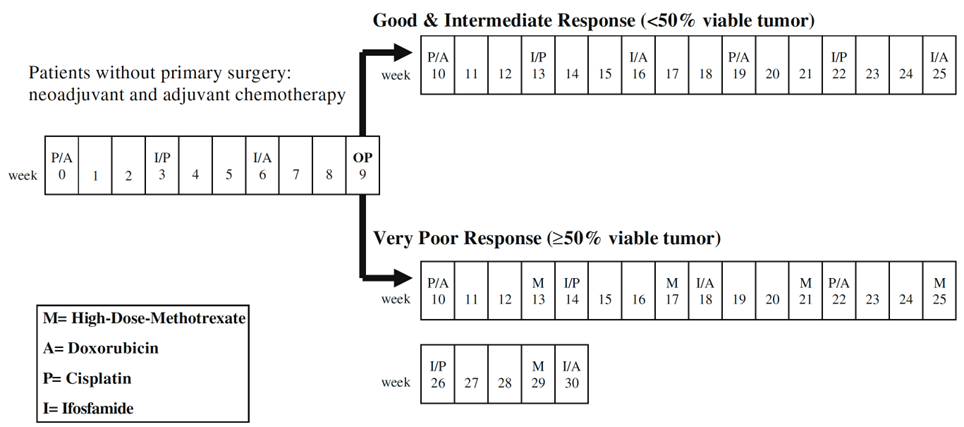
Due to the poorer tolerability of high-dose MTX in this age group, treatment is administered in accordance with the Euro-B.O.S.S. protocol using doxorubicin, cisplatin, and ifosfamide (Figure 5) [30]. A poor histological response is also considered a negative prognostic factor in older patients. The addition of HD-MTX at a reduced dose (8 g/m²) offers an additional option in this case (< 50% necrosis or Salzer-Kuntschik grade 5–6); however, an independent prognostic benefit of this addition cannot be assessed due to the study design [30].
6.1.1.4High-grade craniofacial osteosarcomas/jaw osteosarcomas
Although the risk of distant metastasis is considered somewhat lower, the treatment of high-grade craniofacial osteosarcomas/jaw osteosarcomas should be conducted in a manner analogous to that of high-grade osteosarcomas in other locations [7]. The prognosis in combination with pre- and/or postoperative chemotherapy is considered good [30, 33].
6.2Local therapy
6.2.1Surgery
Surgery should be performed exclusively by surgeons experienced in bone sarcoma surgery who are also proficient in the necessary reconstructive procedures. Achieving an R0 resection is the defined goal of the surgery. In most cases, a limb-sparing approach is possible for osteosarcomas of the extremities and pelvis. The goal should be to perform the osteosarcoma biopsy at the same center where the subsequent tumor resection will take place. A large retrospective analysis of data from the Cooperative Osteosarcoma Study Group (COSS) showed that the risk of local recurrence after a biopsy performed outside the center is more than twice as high as when the biopsy is performed at the center [35]—a shocking finding when one considers that the development of a local recurrence is associated with a dramatic decline in the probability of survival. The same analysis further underscored the importance of treating patients at experienced centers, as limb-sparing surgery was achieved in 70% of patients at high-volume clinics, compared to 51% at low-volume clinics [35]. These limb-sparing rates are now outdated; today, >90% of resections are performed with limb-sparing intent [64]. Depending on the extent of bone destruction, particularly in the long bones, there is a risk of pathological fracture [35], which is slightly increased following open biopsies in particular. To reduce the risk of pathological fractures in the long bones during neoadjuvant chemotherapy, temporary partial unloading or even complete unloading of the affected lower extremity through a may be advisable.
However, unloading is also associated with muscle atrophy and secondary osteopenia, so it cannot be recommended across the board. Since no risk score exists for the development of pathological fractures, the question of whether partial or complete unloading is necessary should be discussed individually with the orthopedic surgeon or trauma surgeon performing the primary biopsy.
In the case of a pathological fracture, internal osteosynthesis should be avoided prior to oncological resection due to the risk of tumor seeding. External splinting or immobilization is preferred. A pathological fracture does not necessarily constitute an indication for amputation. Primary neoadjuvant chemotherapy may be used to reduce the extent of the fracture hematoma and subsequently allow for a wide, limb-sparing resection including the affected soft tissues [67].
Given the frequent metaphyseal location of osteosarcoma in the extremities, defect reconstruction using tumor endoprostheses is the predominant approach. Advantages include rapid return to full weight-bearing on the affected extremity and good functional outcomes. In a historical cohort, the failure rate for all locations was 24.5% [61].
The most common reason for secondary amputation is local recurrence (63%), followed by periprosthetic infection (34%) [36]. In very young patients (< 5 years), the amputation rate is significantly increased due to limited reconstruction options. For osteosarcomas in the femur and proximal tibia in young patients, reverse plasty is a sensible alternative to amputation or the implantation of growth-adjustable prostheses in slightly older children. Reverse plasty is generally a one-time surgical procedure. With the appropriate prosthetic fitting, patients are functionally and emotionally virtually on par with the general population [37].
6.2.2Radiation therapy
Radiation therapy may be considered for primary tumors that are initially unresectable or as adjuvant therapy in cases of high risk of local recurrence and when R0 resection is not feasible. Osteosarcoma is considered relatively radiation-resistant. Therefore, modern, highly conformal radiation therapy techniques such as IMRT or particle therapy with protons or heavy ions should be considered, particularly when curative intent is the goal, in order to achieve high local doses while sparing healthy tissue as much as possible. Although the evidence for radiation therapy is limited and is based primarily on results from retrospective, non-randomized studies with small case numbers and often heterogeneous cohorts, these findings support the role of radiation therapy [4, 58, 60, 65]. In the case of an R0 resection, there is no indication for adjuvant radiation therapy. Radiation therapy can also be used in a palliative treatment approach as an alternative to Surgery and on a symptom- or need-based basis for the treatment of metastases.
6.2.3Local treatment of metastases
Treatment of patients with primary metastatic osteosarcoma can follow the same principles as for patients without metastasis. For patients with exclusively pulmonary metastases, in whom all lesions could be surgically removed, the 5-year survival rate was 44%. If other regions were also affected, the 5-year survival rate was only 19% [38]. For palliative treatment of metastases in cases of fracture risk or pain, local radiation therapy may be considered. Since L-MTP-PE (mifamurtide) did not result in any survival benefit in this patient group, it should not be used outside of clinical trials in this setting either [39].
6.3Special Situations
6.3.1relapse
Treatment in the event of a relapse or metastasis depends on the time interval since primary therapy as well as on the number and location of the metastases [38]. It should also be considered whether radiation therapy was already administered during primary therapy. For example, a disease-free interval > 18–24 months, ≤ 2 lung metastases, and unilateral pulmonary involvement without pleural involvement are considered favorable prognostic factors. Treatment should preferably be performed at an experienced center.
6.3.1.1Potentially resectable disease
Treatment is primarily surgical, provided that complete removal of the local relapse and/or metastases can be achieved. Approximately one-third of patients survive longer than 5– -years after a second surgical remission [40]. This also applies to recurrent relapses. If surgery is not possible, alternative procedures such as (stereotactic) radiotherapy, radiofrequency ablation (RFA), or cryotherapy can be used to treat lung metastases [7]. RFA and (stereotactic) radiotherapy can also be used as options for treating bone metastases [41]. The role of repeat adjuvant chemotherapy after achieving a second surgical remission is not clearly established. Retrospective analyses exist that show either no benefit, a benefit only in a subgroup (e.g., patients with ≥ 3 lung metastases), or a small benefit [38, 40, 42]. We recommend considering second-line chemotherapy in patients with early relapse (within 12 months), multiple metastases (≥ 3 lung metastases), or pleural involvement, in addition to resection of all manifest tumor foci. The agents used include carboplatin and etoposide, high-dose ifosfamide alone or in combination with etoposide, gemcitabine and docetaxel [43, 45], as well as cyclophosphamide and topotecan [46]. Based on current knowledge, patients with a late, solitary pulmonary relapse do not benefit from additional salvage chemotherapy [47]. Further treatment in the form of maintenance therapy is not part of the standard of care during second complete remission.
6.3.1.2Unresectable disease
In patients with unresectable local recurrence or extensive metastasis, treatment is provided with palliative intent. For these patients, referral to a molecular tumor board should be considered (see below). Depending on the patient’s general condition and previous chemotherapy, the same treatment regimens as described in Chapter 6.3.1.1 may be considered. In addition to classic chemotherapies, the use of targeted agents (alone or in combination) for which a prolongation of the progression-free interval has been observed in Phase I/II studies may also be considered (e.g., sorafenib with or without everolimus [48, 49], gemcitabine/sirolimus [50], regorafenib [51, 52], cabozantinib [53].
For regorafenib, randomized Phase II data are available for metastatic, previously treated osteosarcoma showing significantly prolonged progression-free survival (PFS) compared to placebo. A significant OS benefit was not demonstrated in the available data. Additionally, data from 2025 on regorafenib as maintenance therapy following doxorubicin-based therapy showed a PFS benefit (the study was not powered to detect an OS benefit). In a single-arm Phase II study in patients with previously treated, advanced osteosarcoma, cabozantinib demonstrated a clinically relevant 6-month non-progression rate of 33%. Activity was confirmed in a multicenter real-world cohort published in 2023 (median PFS in the range of a few months). These agents remain off-label/individualized options and should preferably be used within the context of clinical trials or following a multidisciplinary/molecular tumor board decision [52, 62, 63, 66].
6.3.1.3Molecular profiling/rare targets
Current studies are also examining the use of immune checkpoint inhibitors (ICIs) in patients with advanced or metastatic osteosarcoma. If microsatellite instability (MSI-H), mismatch repair deficiency (dMMR), or a high tumor mutation burden (TMB-H) is detected, treatment with pembrolizumab or with nivolumab/ipilimumab. In cases of unresectable/metastatic disease, expanded molecular profiling (e.g., NGS-based tumor profiling, including fusion diagnostics) should be considered to identify rare alterations that may be amenable to targeted therapy (e.g., NTRK fusions; overall very rare in bone tumors). Therapies with appropriate targeted agents (e.g., TRK inhibitors for NTRK fusions) should preferably be administered in this setting within the framework of clinical trials or following a tumor board decision [63, 68].
7Rehabilitation
Surgery, radiation therapy, and systemic tumor therapy can lead to treatment-related complications of varying severity that require targeted rehabilitative measures. Added to this are the specific psychological and social impacts of cancer in adolescents and young adults. Patients should be informed at an early stage about the options for outpatient and inpatient rehabilitation measures as well as other entitlements arising from social welfare law. Regarding the choice of rehabilitation clinic, the patient’s wishes should be taken into account (§9 SGB IX). Nevertheless, a recommendation should be made for a clinic with an oncology focus that also has specific experience with the age group of patients with osteosarcoma. Furthermore, experience with patients following major tumor surgeries of the skeletal system is advisable to ensure targeted physical therapy.
8follow-up
The goal of follow-up care is the early detection of local recurrence or metastasis, with the possibility of initiating specific therapy, as well as the assessment of long-term effects of the therapy. Follow-up care (Table 6) includes a physical examination, a chest X-ray or, alternatively, a low-dose chest CT (HR-CT), a conventional X-ray and MRI of the primary tumor region, as well as assessment of long-term effects. Imaging intervals are every 3 months for the first 2 years, every 6 months from the 3rd to the 5th year, and annually thereafter for at least 10 years following the primary diagnosis [73]. In cases of suspected recurrence, an FDG-PET/CT or FDG-PET MRI may be helpful in individual cases [67]. In cases of confirmed Li-Fraumeni syndrome, structured follow-up is performed, including regular whole-body MRI examinations [71].
9References
Bielack SS, Machatschek JN, Flege S, Jürgens H. Delaying surgery with chemotherapy for osteosarcoma of the extremities. Expert Opin Pharmacother 2004;5:1243-1256. DOI:10.1517/14656566.5.6.1243
Bernthal NM, Federman N, Eilber FR et al. Long-term results (>25 years) of a randomized, prospective clinical trial evaluating chemotherapy in patients with high-grade, operable osteosarcoma. Cancer 2012;118:5888-5893. DOI:10.1002/cncr.27651
Anninga JK, Gelderblom H, Fiocco M et al. Chemotherapeutic adjuvant treatment for osteosarcoma: where do we stand? Eur J Cancer 2011;47:2431-2445. DOI:10.1016/j.ejca.2011.05.030
Ozaki T, Flege S, Liljenqvist U et al. Osteosarcoma of the spine: experience of the Cooperative Osteosarcoma Study Group. Cancer 2002;94:1069-1077. PMID:11920477
Bielack S, Jürgens H, Jundt G et al. Osteosarcoma: the COSS experience. Cancer Treat Res 2009;152:289-308. DOI:10.1007/978-1-4419-0284-9_15
Bielack SS, Kempf-Bielack B, Delling G et al. Prognostic factors in high-grade osteosarcoma of the extremities or trunk: an analysis of 1,702 patients treated on neoadjuvant Cooperative Osteosarcoma Study Group protocols. J Clin Oncol 2002;20:776-790. DOI:10.1200/JCO.2002.20.3.776
Gatta G, Capocaccia R, Botta L et al. Burden and centralized treatment in Europe of rare tumors: results of RARECAREnet—a population-based study. Lancet Oncol. 2017;18:1022-1039. DOI:10.1016/S1470-2045(17)30445-X
Smida J, Baumhoer D, Rosemann M et al. Genomic alterations and allelic imbalances are strong prognostic predictors in osteosarcoma. Clin Cancer Res 2010;16:4256-4267. DOI:10.1158/1078-0432.CCR-10-0284
Kovac M, Blattmann C, Ribi S et al. Exome sequencing of osteosarcoma reveals mutation signatures reminiscent of BRCA deficiency. Nat Commun 2015;6:8940. DOI:10.1038/ncomms9940
Smeland S, Bielack SS, Whelan J et al. Survival and prognosis with osteosarcoma: outcomes in more than 2000 patients in the EURAMOS-1 (European and American Osteosarcoma Study) cohort. Eur J Cancer 2019;109:36-50. DOI:10.1016/j.ejca.2018.11.027
Kaste SC, Pratt CB, Cain AM, Jones-Wallace DJ, Rao BN. Metastases detected at the time of diagnosis of primary pediatric extremity osteosarcoma: imaging features. Cancer 1999;86:1602-1608. PMID:10526292
Ruengwanichayakun P, Gambarotti M, Frisoni T et al. Parosteal osteosarcoma: a monocentric retrospective analysis of 195 patients. Hum Pathol 2019;91:11-18. DOI:10.1016/j.humpath.2019.05.009 15
Berner K, Johannesen TB, Bruland ØS. Clinical epidemiology of low-grade and dedifferentiated osteosarcoma in Norway during 1975 and 2009. Sarcoma 2015;2015:917679. DOI:10.1155/2015/917679
Grimer RJ, Bielack S, Flege S et al. Periosteal osteosarcoma - a European review of outcome. Eur J Cancer 2005;41:2806-2811. DOI:10.1016/j.ejca.2005.04.052
Cesari M, Alberghini M, Vanel D et al. Periosteal osteosarcoma: a single-institution experience. Cancer 2011;117:1731-1735. DOI:10.1002/cncr.25718
Goorin AM, Schwartzentruber DJ, Devidas M et al. Presurgical chemotherapy compared with immediate surgery and adjuvant chemotherapy for nonmetastatic osteosarcoma: Pediatric Oncology Group Study POG-8651. J Clin Oncol 2003;21:1574-1580. DOI:10.1200/JCO.2003.08.165
Grohar PJ, Janeway KA, Mase LD, Schiffman JD. Advances in the treatment of pediatric bone sarcomas. Am Soc Clin Oncol Educ Book 2017;37:725-735. DOI:10.1200/EDBK_175378
Bielack S, Cable MG, Gorlick R et al. Osteosarcoma - approach to therapy. In: Arndt CAS, ed. Sarcomas of Bone and Soft Tissues in Children and Adolescents. Cham: Springer International Publishing; 2021:91-109. DOI:10.1007/978-3-030-51160-9_8
Bacci G, Bertoni F, Longhi A et al. Neoadjuvant chemotherapy for high-grade central osteosarcoma of the extremity. Histologic response to preoperative chemotherapy correlates with histologic subtype of the tumor. Cancer 2003;97:3068-3075. DOI:10.1002/cncr.11456
Hauben EI, Weeden S, Pringle J, Van Marck EA, Hogendoorn PC. Does the histological subtype of high-grade central osteosarcoma influence the response to treatment with chemotherapy and does it affect overall survival? A study on 570 patients from two consecutive trials of the European Osteosarcoma Intergroup. Eur J Cancer 2002;38:1218-1225. DOI:10.1016/s0959-8049(02)00037-0
Bacci G, Longhi A, Versari M, Mercuri M, Briccoli A, Picci P. Prognostic factors for osteosarcoma of the extremity treated with neoadjuvant chemotherapy: 15-year experience in 789 patients treated at a single institution. Cancer 2006;106:1154-1161. DOI:10.1002/cncr.21724
Imran H, Enders F, Krailo M et al. Effect of time to resumption of chemotherapy after definitive surgery on prognosis for non-metastatic osteosarcoma. J Bone Joint Surg Am 2009;91:604-612. DOI:10.2106/JBJS.H.00449
Mialou V, Philip T, Kalifa C et al. Metastatic osteosarcoma at diagnosis: prognostic factors and long-term outcome—the French pediatric experience. Cancer 2005;104:1100-1109. DOI:10.1002/cncr.21263
Kager L, Zoubek A, Pötschger U et al. Primary metastatic osteosarcoma: presentation and outcome of patients treated on neoadjuvant Cooperative Osteosarcoma Study Group protocols. J Clin Oncol 2003;21:2011-2018. DOI:10.1200/JCO.2003.08.132
Aljubran AH, Griffin A, Pintilie M, Blackstein M. Osteosarcoma in adolescents and adults: survival analysis with and without lung metastases. Ann Oncol 2009;20:1136-1141. DOI:10.1093/annonc/mdn731
Bielack SS, Smeland S, Whelan JS et al. Methotrexate, doxorubicin, and cisplatin (MAP) plus maintenance pegylated interferon alfa-2b versus MAP alone in patients with resectable high-grade osteosarcoma and a good histologic response to preoperative MAP: first results of the EURAMOS-1 Good Response randomized controlled trial. J Clin Oncol 2015;33:2279-2287. DOI:10.1200/JCO.2014.60.0734
Marina NM, Smeland S, Bielack SS et al. Comparison of MAPIE versus MAP in patients with a poor response to preoperative chemotherapy for newly diagnosed high-grade osteosarcoma (EURAMOS-1): an open-label, international, randomized controlled trial. Lancet Oncol 2016;17:1396-1408. DOI:10.1016/S1470-2045(16)30214-5
Meyers PA, Schwartz CL, Krailo MD et al. Osteosarcoma: the addition of muramyl tripeptide to chemotherapy improves overall survival - a report from the Children's Oncology Group. J Clin Oncol 2008;26:633-638. DOI:10.1200/JCO.2008.14.0095
Bielack SS, Marina N, Ferrari S et al. Osteosarcoma: the same old drugs or more? J Clin Oncol 2008;26:3102-3103. DOI:10.1200/JCO.2008.17.1108
Ferrari S, Bielack SS, Smeland S et al. EURO-B.O.S.S.: A European study on chemotherapy in bone-sarcoma patients aged over 40: Outcome in primary high-grade osteosarcoma. Tumori 2018;104:30-36. DOI:10.5301/tj.5000696
Jasnau S, Meyer U, Potratz J et al. Craniofacial osteosarcoma: Experience of the cooperative German-Austrian-Swiss osteosarcoma study group. Oral Oncol 2008;44:286-294. DOI:10.1016/j.oraloncology.2007.03.001
Thariat J, Julieron M, Brouchet A et al. Osteosarcomas of the mandible: are they different from other tumor sites? Crit Rev Oncol Hematol 2012;82:280-295. DOI:10.1016/j.critrevonc.2011.07.001
Baumhoer D, Brunner P, Eppenberger-Castori S, Smida J, Nathrath M, Jundt G. Osteosarcomas of the jaws differ from their peripheral counterparts and require a distinct treatment approach. Experiences from the DOESAK Registry. Oral Oncol 2014;50:147-153. DOI:10.1016/j.oraloncology.2013.10.017
Frezza AM, Beale T, Bomanji J et al. Is [F-18]-fluorodeoxy-D-glucose positron emission tomography of value in the management of patients with craniofacial bone sarcomas undergoing neoadjuvant treatment? BMC Cancer 2014;14:23. DOI:10.1186/1471-2407-14-23
Andreou D, Bielack SS, Carrle D et al. The influence of tumor- and treatment-related factors on the development of local recurrence in osteosarcoma after adequate surgery. An analysis of 1,355 patients treated on neoadjuvant Cooperative Osteosarcoma Study Group protocols. Ann Oncol 2011;22:1228-1235. DOI:10.1093/annonc/mdq589
Hardes J, Guder W, Dudda M, Nottrott M, Podleska LE, Streitburger A. Current results of tumor endoprosthetics in adolescents and adults. Orthopade 2019;48:744-751. German. DOI:10.1007/s00132-019-03788-5
Grimsrud C, Killen C, Murphy M, Wang H, McGarry S. Long-term outcomes of rotation plasty patients in the treatment of lower extremity sarcomas with cost analysis. J Clin Orthop Trauma 2020;11(Suppl 1):S149-S152. DOI:10.1016/j.jcot.2019.06.003
Ferrari S, Briccoli A, Mercuri M et al. Postrelapse survival in osteosarcoma of the extremities: prognostic factors for long-term survival. J Clin Oncol 2003;21:710-715. DOI:10.1200/JCO.2003.03.141
Chou AJ, Kleinerman ES, Krailo MD et al. Addition of muramyl tripeptide to chemotherapy for patients with newly diagnosed metastatic osteosarcoma: a report from the Children's Oncology Group. Cancer 2009;115:5339-5348. DOI:10.1002/cncr.24566
Kempf-Bielack B, Bielack SS, Jürgens H et al. Osteosarcoma relapse after combined modality therapy: an analysis of unselected patients in the Cooperative Osteosarcoma Study Group (COSS). J Clin Oncol 2005;23:559-568. DOI:10.1200/JCO.2005.04.063
de Baere T, Tselikas L, Gravel G et al. Interventional radiology: Role in the treatment of sarcomas. Eur J Cancer 2018;94:148-155. DOI:10.1016/j.ejca.2018.02.017
Palmerini E, Torricelli E, Cascinu S et al. Is there a role for chemotherapy after local relapse in high-grade osteosarcoma? Pediatr Blood Cancer 2019;66:e27792. DOI:10.1002/pbc.27792
Gazouli I, Kyriazoglou A, Kotsantis I et al. Systematic review of systemic therapy for recurrent osteosarcoma. Cancers (Basel) 2021;13:1757. DOI:10.3390/cancers13081757
Palmerini E, Jones RL, Marchesi E et al. Gemcitabine and docetaxel in relapsed and unresectable high-grade osteosarcoma and spindle cell sarcoma of bone. BMC Cancer 2016;16:280. DOI:10.1186/s12885-016-2312-3
Navid F, Willert JR, McCarville MB et al. Combination of gemcitabine and docetaxel in the treatment of children and young adults with refractory bone sarcoma. Cancer 2008;113:419-425. DOI:10.1002/cncr.23586
Saylors RL, 3rd, Stine KC, Sullivan J et al. Cyclophosphamide plus topotecan in children with recurrent or refractory solid tumors: a Pediatric Oncology Group phase II study. J Clin Oncol 2001;19:3463-3469. DOI:10.1200/JCO.2001.19.15.3463
Daw NC, Chou AJ, Jaffe N et al. Recurrent osteosarcoma with a single pulmonary metastasis: a multi-institutional review. Br J Cancer 2015;112:278-282. DOI:10.1038/bjc.2014.585
Grignani G, Palmerini E, Ferraresi V et al. Sorafenib and everolimus for patients with unresectable high-grade osteosarcoma progressing after standard treatment: a non-randomized phase 2 clinical trial. Lancet Oncol 2015;16:98-107. DOI:10.1016/S1470-2045(14)71136-2
Grignani G, Palmerini E, Dileo P et al. A phase II trial of sorafenib in relapsed and unresectable high-grade osteosarcoma after failure of standard multimodal therapy: an Italian Sarcoma Group study. Ann Oncol 2012;23:508-516. DOI:10.1093/annonc/mdr151
Martin-Broto J, Redondo A, Valverde C et al. Gemcitabine plus sirolimus for patients with relapsed and progressive osteosarcoma after standard chemotherapy: a multicenter, single-arm phase II trial of the Spanish Group for Research on Sarcoma (GEIS). Ann Oncol 2017;28:2994-2999. DOI:10.1093/annonc/mdx536
Duffaud F, Mir O, Boudou-Rouquette P et al. Efficacy and safety of regorafenib in adult patients with metastatic osteosarcoma: a non-comparative, randomized, double-blind, placebo-controlled, phase 2 study. Lancet Oncol 2019;20:120-133. DOI:10.1016/S1470-2045(18)30742-3
Davis LE, Bolejack V, Ryan CW et al. Randomized double-blind phase II study of regorafenib in patients with metastatic osteosarcoma. J Clin Oncol 2019;37:1424-1431. DOI:10.1200/JCO.18.02374
Italiano A, Mir O, Mathoulin-Pelissier S et al. Cabozantinib in patients with advanced Ewing sarcoma or osteosarcoma (CABONE): a multicenter, single-arm, phase 2 trial. Lancet Oncol 2020;21:446-455. DOI:10.1016/S1470-2045(19)30825-3
Marabelle A, Fakih M, Lopez J et al. Association of tumor mutational burden with outcomes in patients with advanced solid tumors treated with pembrolizumab: prospective biomarker analysis of the multicenter, open-label, phase 2 KEYNOTE-158 study. Lancet Oncol 2020;21:1353-1365. DOI:10.1016/S1470-2045(20)30445-9
Marabelle A, Le DT, Ascierto PA et al. Efficacy of pembrolizumab in patients with noncolorectal high microsatellite instability/mismatch repair-deficient cancer: results from the phase II KEYNOTE-158 study. J Clin Oncol 2020;38:1-10. DOI:10.1200/JCO.19.02105
Schenker M, Burotto M, Richardet M et al. Randomized, open-label, phase 2 study of nivolumab plus ipilimumab or nivolumab monotherapy in patients with advanced or metastatic solid tumors of high tumor mutational burden. J Immunother Cancer 2024;12:e008872. DOI:10.1136/jitc-2024-008872
Bacci G, Longhi A, Fagioli F, Briccoli A, Versari M, Picci P. Adjuvant and neoadjuvant chemotherapy for osteosarcoma of the extremities: 27 years of experience at the Rizzoli Institute, Italy. Eur J Cancer 2005;41:2836-2845. DOI:10.1016/j.ejca.2005.08.026
DeLaney TF, Park L, Goldberg SI et al. Radiotherapy for local control of osteosarcoma. Int J Radiat Oncol Biol Phys 2005;61:492-498. DOI:10.1016/j.ijrobp.2004.05.051
Gaspar N, Occean BV, Pacquement H et al. Results of methotrexate-etoposide-ifosfamide-based regimen (M-EI) in osteosarcoma patients included in the French OS2006/sarcome-09 study. Eur J Cancer 2018;88:57-66. DOI:10.1016/j.ejca.2017.09.036
Guadagnolo BA, Zagars GK, Raymond AK, Benjamin RS, Sturgis EM. Osteosarcoma of the jaw/craniofacial region: outcomes after multimodal treatment. Cancer 2009;115:3262-3270. DOI:10.1002/cncr.24297
Henderson ER, Groundland JS, Pala E et al. Failure mode classification for tumor endoprostheses: retrospective review of five institutions and a literature review. J Bone Joint Surg Am 2011;93:418-429. DOI:10.2106/JBJS.J.00834
Kokkali S, Kyriazoglou A, Mangou E et al. Real-world data on cabozantinib in advanced osteosarcoma and Ewing sarcoma patients: a study from the Hellenic group of sarcoma and rare cancers. J Clin Med 2023;12:1119. DOI:10.3390/jcm12031119
Lam SW, Briaire-de Bruijn IH, van Wezel T et al. NTRK fusions are extremely rare in bone tumors. Histopathology 2021;79:880-885. DOI:10.1111/his.14432
Meltzer PS, Helman LJ. New horizons in the treatment of osteosarcoma. N Engl J Med 2021;385:2066-2076. DOI:10.1056/NEJMra2103423
Ozaki T, Flege S, Kevric M et al. Osteosarcoma of the pelvis: experience of the Cooperative Osteosarcoma Study Group. J Clin Oncol 2003;21:334-341. DOI:10.1200/JCO.2003.01.142
Penel N, Italiano A, Wallet J et al. Regorafenib as maintenance therapy after first-line doxorubicin-based chemotherapy in patients with advanced non-adipocytic soft tissue sarcomas: a double-blind randomized trial. Ann Oncol 2025;36:944-953. DOI:10.1016/j.annonc.2025.03.024
Strauss SJ, Frezza AM, Abecassis N et al. Bone sarcomas: ESMO-EURACAN-GENTURIS-ERN PaedCan Clinical Practice Guideline for diagnosis, treatment, and follow-up. Ann Oncol 2021;32:1520-1536. DOI:10.1016/j.annonc.2021.08.1995
Suehara Y, Alex D, Bowman A et al. Clinical genomic sequencing of pediatric and adult osteosarcoma reveals distinct molecular subsets with potentially targetable alterations. Clin Cancer Res 2019;25:6346-6356. DOI:10.1158/1078-0432.CCR-18-4032
Thariat J, Chevalier F, Orbach D et al. Avoidance or adaptation of radiotherapy in patients with cancer with Li-Fraumeni and heritable TP53-related cancer syndromes. Lancet Oncol 2021;22:e562-e574. DOI:10.1016/S1470-2045(21)00425-3
van Ewijk R, Herold N, Baecklund F et al. European standard clinical practice recommendations for children and adolescents with primary and recurrent osteosarcoma. EJC Paediatric Oncology 2023;2:100029 DOI:10.1016/j.ejcped.2023.100029
Villani A, Shore A, Wasserman JD, et al. Biochemical and imaging surveillance in germline TP53 mutation carriers with Li-Fraumeni syndrome: 11-year follow-up of a prospective observational study. Lancet Oncol 2016;17:1295–1305. DOI:10.1016/S1470-2045(16)30249-2
Weidlinger S, Graber S, Bratschi I et al. A systematic review of the gonadotoxicity of osteosarcoma and Ewing's sarcoma chemotherapies in postpubertal females and males. J Adolesc Young Adult Oncol 2024;13:597-606. DOI:10.1089/jayao.2023.0185
Hecker-Nolting S, Kager L, Kühne T et al. Ultra-late osteosarcoma recurrences: an analysis of 17 Cooperative Osteosarcoma Study Group patients with a first recurrence detected more than 10 years after primary tumor diagnosis. J Adolesc Young Adult Oncol 2023;12:76-82. DOI:10.1089/jayao.2021.0221
11[Chapter not relevant]
12[Chapter not relevant]
13[Chapter not relevant]
14[Chapter not relevant]
15Disclosure of Potential Conflicts of Interest
| Author | Employer1 | Consulting / Expert opinion2 | Shares / Funds3 | Patent / Copyright / License 4 | Fees5 | Funding of scientific research6 | Other financial relations7 | Personal relationship with authorized representatives8 |
|---|---|---|---|---|---|---|---|---|
| Andreou, Dimosthenis |
Aktuell: Medizinische Universität Graz
Davor: Helios Klinikum Bad Saarow
|
No
|
No
|
No
|
Yes
Honorare für Vortragstätigkeiten: PharmaMar
|
No
|
No
|
No
|
| Bauer, Sebastian |
Universitätsklinikum Essen
|
No
|
No
|
No
|
No
|
No
|
No
|
No
|
| Bielack, Stefan |
Klinikum Stuttgart
Pädiatrie 5 Onkologie, Hämatologie und Immunologie
|
Yes
MAP biopharma, Y-mabs, EISAI, Boehringer-Ingelheim, Hoffmann-La Roche
|
No
|
No
|
No
|
No
|
No
|
No
|
| Grube, Matthias |
Medizinische Klinik und Poliklinik III
Universitätsklinikum Regensburg
93042 Regensburg
|
Yes
Berater/Advisory Board der Firmen:
- Janssen
- Sanofi
- Bayer
|
No
|
No
|
Yes
Firma AURIKAMED
|
No
|
Yes
Pharmamar
|
No
|
| Hartmann, Wolfgang |
Universitätsklinikum Münster
|
No
|
No
|
No
|
No
|
No
|
No
|
No
|
| Hecker-Nolting, Stefanie | Conflict of interest declarations pending | |||||||
| Kollàr, Attila |
Inselspital, Universitätsspital Bern
Universitätsklinik für Medizinische Onkologie
|
No
|
No
|
No
|
Yes
Lilly, Bayer, PharmaMar, Amgen
|
No
|
Yes
PharmaMar, Vifor
|
No
|
| Kraywinkel, Klaus |
Robert Koch-Institut
|
No
|
No
|
No
|
No
|
No
|
No
|
No
|
| Lindner, Lars H. |
LMU Klinikum, München
|
No
|
No
|
No
|
No
|
No
|
No
|
No
|
| Szkandera, Joanna |
Medizinische Universität Graz
|
Yes
Advisory Board für PharmaMar, Lilly, Bayer
|
No
|
No
|
Yes
Vorträge für PharmaMar, Roche, Lilly
|
Yes
Forschungsförderung von PharmaMar, Roche, Eisai
|
Yes
Reisekostenerstattung für Kongresse von PharmaMar, Roche, Lilly
|
No
|
| Timmermann, Beate | Conflict of interest declarations pending | |||||||
| Tunn, Per Ulf |
Helios Klinikum Berlin Buch
Klinik für Tumororthopädie
Schwanebecker Chaussee 50
13125 Berlin
|
No
|
No
|
No
|
No
|
No
|
No
|
No
|
| Wörtler, Klaus |
Klinikum rechts der Isar der TU München
|
No
|
No
|
No
|
No
|
No
|
No
|
No
|
2 - Activity as a consultant or expert or paid participation in a scientific advisory board of a company in the health care industry (e.g., pharmaceutical industry, medical device industry), a commercially oriented contract research organization, or an insurance company.
3 - Ownership of business shares, stocks, funds with participation of companies of the health care industry.
4 - Relates to drugs and medical devices.
5 - Honoraria for lecturing and training activities or paid authors or co-authorships on behalf of a company in the health care industry, a commercially oriented contracting institute or an insurance company.
6 - Financial support (third-party funds) for research projects or direct financing of employees of the institution by a company in the health care industry, a commercially oriented contract institute or an insurance company.
7 - Other financial relationships, e.g., gifts, travel reimbursements, or other payments in excess of 100 euros outside of research projects, if paid by an entity that has an investment in, license to, or other commercial interest in the subject matter of the investigation.
8 - Personal relationship with an authorized representative(s) of a healthcare company.
Download
Reference:
Quellenangabe:
Onkopedia-Leitlinien werden kontinuierlich an den Stand des Wissens angepasst. Die jeweils gültige Version, AGB und Nutzungsbedingungen finden Sie unter www.onkopedia.com.
Für die kommerzielle Nutzung wenden Sie sich bitte an onkopedia@dgho.de.
Onkopedia guidelines are continuously adapted to the state of knowledge. The currently valid version, terms of use and general terms and conditions can be found at onkopedia-guidelines.info.
For commercial use, please contact onkopedia@dgho.de.